
The Importance of Financial Diagnostics Before Transformation
Investing in a new enterprise resource planning (ERP) system, deploying robotic process automation for accounting tasks or reorganizing a finance department without having diagnosed its processes means risking digitizing chaos or automating inefficiencies. The diagnostic puts facts on the table: where time is lost, where risk is concentrated, where teams compensate through Excel, and which decisions must be made before transformation starts.
In short, transforming the finance function requires a rigorous assessment of existing processes to target the improvements needed.
Consulting Insight
This preliminary step matters all the more because the expected gains from a financial transformation (digitalization, cost optimization, organizational redesign) are substantial: greater efficiency, better agility, enhanced competitiveness, strengthened resilience. To reach these results, the initial diagnostic remains a mandatory step, building the rest of the project on solid foundations.
Ignoring this diagnostic means risking missing the root causes of dysfunction and therefore failing to capture the expected benefits of the transformation.
A Structured Methodology for Financial Process Diagnostics
How to concretely carry out this financial diagnostic? Strategy consulting firms and mature finance departments generally apply a four-step methodology to analyze and redesign processes, from initial mapping to the transformation roadmap. This structured and pedagogical approach works equally well for CAC 40 groups and small and mid-sized enterprises (SMEs) looking to structure or digitalize.
Current Financial Flow Mapping
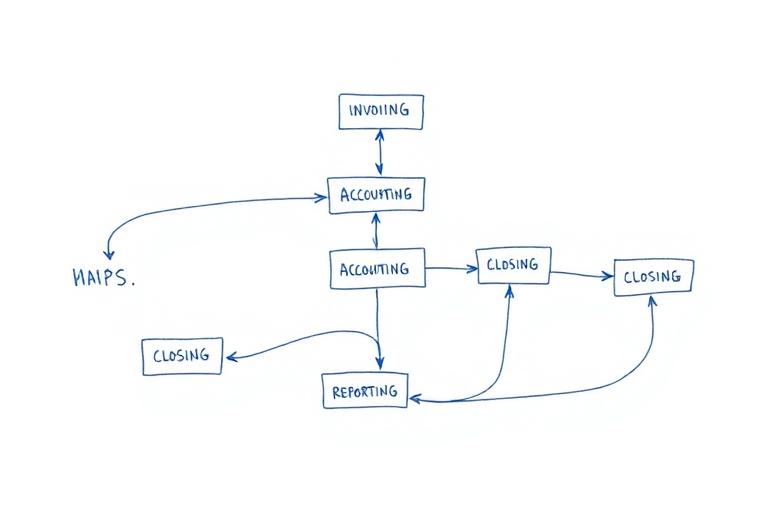
The first step is to map all financial flows and processes, from invoicing to close. This means visualizing end-to-end existing processes and drawing a clear picture: who issues invoices and how do they circulate between departments? What are the control and validation points? How does the monthly or annual accounting close proceed?
This mapping provides a complete and concrete overview of financial operations, making the invisible visible. In other words, it lays out "who does what" and how, providing a global view of the organization.
This "x-ray" of financial processes is a core tool for gaining efficiency and profitability. By identifying the key stages of each process (e.g., the procure-to-pay cycle, the customer invoicing process, the record-to-report close cycle, etc.), the company can identify risk zones, bottlenecks and blocking points that slow operations.
Identifying Pain Points and Inefficiencies

Once the current situation is mapped, the diagnostic focuses on identifying "pain points": all dysfunctions, duplications, delays, errors and other friction points in financial processes. This critical inventory highlights what mapping alone cannot reveal: operational blind spots where daily inefficiencies lurk.
Common pain points include:
- Repetitive manual entries (error sources)
- Abnormally long delays (e.g., for issuing an invoice or collecting customer payment)
- Lack of automation (processes still too paper-based or Excel-dependent)
- Control gaps that may create regulatory non-compliance risk
Consulting Insight
The diagnostic's objective is to quantify the impact of these pain points (lost time, financial risk, internal or external client dissatisfaction) to prioritize their resolution. By sharing this assessment objectively, the diagnostic creates consensus on the problems to solve during the transformation.
Benchmarking Against Best Practices
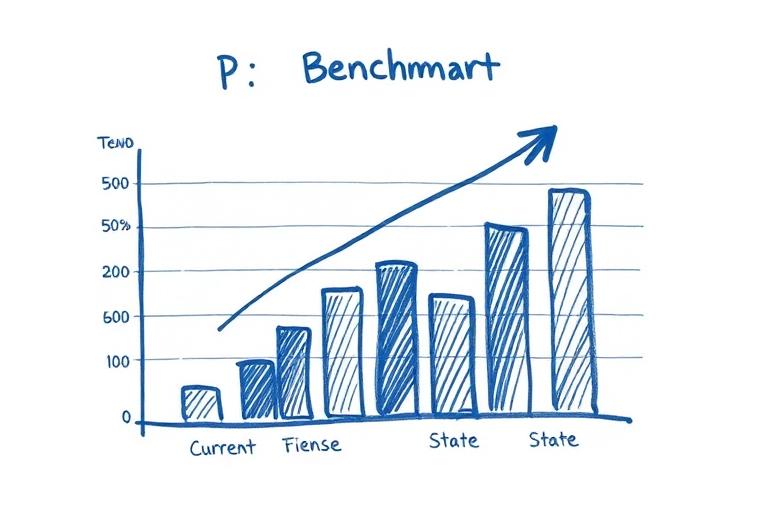
Once internal dysfunctions are identified, it is valuable to compare against external references. This is the role of the benchmarking step, which evaluates the company's financial processes against market best practices, whether industry-specific (comparison with peers or competitors) or functional (adoption of "best-in-class" digital finance standards).
Benchmarking provides a dual perspective:
- It measures the gap or lead of the company on certain dimensions (accounting close time, level of invoicing automation, etc.)
- It inspires solutions by showing how top performers operate, what technologies or organizations they adopt
For example, benchmarks show that in accounting close, the most performant companies use specialized fast close tools and manage to reduce their close times by more than 50%; or that banking reconciliation automation can achieve an automatic matching rate of 90%.
Prioritized Transformation Roadmap
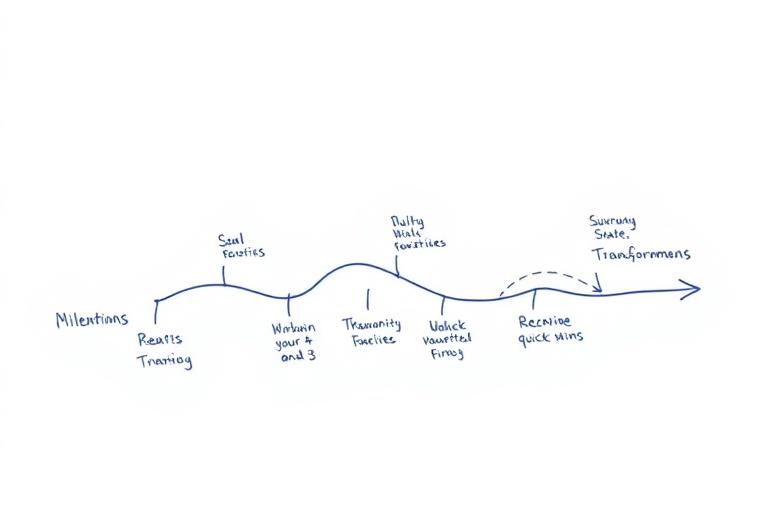
The final step of the diagnostic is to develop a roadmap for the transformation of financial processes. Armed with findings (mapping, pain points) and improvement ideas (benchmarks, digital innovations), a detailed and prioritized action plan must be structured.
The idea is to propose quantified and prioritized recommendations based on expected gain, cost and feasibility of each initiative. In particular, look to identify Quick Wins: improvements that are quick to implement, low-cost, but deliver immediate benefit. Place them at the top of the roadmap.
Consulting Insight
Best practice is to evaluate each initiative by its potential return on investment (ROI) and operational feasibility, then position actions in a plan based on these criteria. An impact-effort matrix can be used to sequence deployment: "win-win" actions with high impact and low effort first, while high-impact but high-effort initiatives are subject to strategic arbitration.
The result is a pragmatic roadmap that indicates what to do, in what order, with what investments, to drive financial transformation in a controlled manner. This roadmap ideally comes with key performance indicators (KPIs) and a monitoring framework to manage the transformation over time.
Concrete Gains from a Successful Financial Transformation
Beyond methodology, what can concretely be expected from such a diagnostic and the ensuing transformation? Examples abound of measurable benefits that financial process optimization can deliver:
DSO Reduction (Days Sales Outstanding)
An optimized order-to-cash process reduces the time to convert sales into cash. For example, automating invoicing and payment reminders can significantly reduce DSO. A recent study showed that 99% of companies that deployed AI-driven customer reminder workflows saw their DSO decrease, and 75% of them reduced this delay by at least 6 days.
Shorter Accounting Close Cycles
By eliminating bottlenecks identified during the diagnostic (late entries, serial validations, manual controls, etc.) and equipping with fast close tools, companies can drastically reduce close time. For example, implementing a collaborative close solution achieved an average 26% reduction in close time.
Reconciliation and Low-Value Task Automation
Account reconciliation (banks, customer-supplier, intercos) is often laborious work for accounting teams. Financial process transformation aims to automate these repetitive tasks through RPA tools or specialized modules. Experience shows up to a 31% reduction in time spent on reconciliations through automation.
Better Governance and Data Quality
By modernizing financial processes, data management inevitably improves. The goal is to achieve a "single source of truth" for financial data, accessible in real time. Target systems and processes incorporate consistency controls, strengthening financial information reliability. One study found a 39% improvement in data accuracy after deploying a modernized financial management tool.
Current Trends: Digitalization, Automation and Real-Time Finance
It is important to place this financial process diagnostic in the broader context of trends transforming the finance function today. Finance departments are engaged in a fundamental shift toward greater digitalization and agility.
Accelerating Digitalization of Financial Processes
Digital transformation of the finance function is a widely recognized imperative. Yet many companies are still in early stages. French Chief Financial Officers (CFOs) rate their average digital maturity at only 6.2/10, according to the Trends of Finance 2023 study. Significant room for improvement remains in process digitalization (dematerialization, analytical tools, cloud solution deployment, etc.).
Automation and RPA (Robotic Process Automation)
Robotic automation is one of the key technological levers for the finance function. RPA uses software robots to execute repetitive tasks in place of humans, error-free and at high speed: data entry, invoice processing, accounting reconciliations, compliance controls. It improves process accuracy while reducing error and non-compliance risks.
Next-Generation ERP and Integrated Systems
Many groups are undertaking migration projects to next-generation ERPs (SAP S/4HANA, Oracle Cloud ERP, etc.) to benefit from a more agile and unified architecture. Modern ERPs bring centralization of financial processes on a single platform, simplified and standardized workflows, and above all native real-time integration in transaction processing and analysis.
Real-Time Financial Reporting
One of the most significant changes linked to digitalization is the shift from periodic reporting (often monthly) to near-real-time reporting. Finance departments increasingly seek an instant view of the company's financial health at any time, through dynamic dashboards and continuously updated data. The trend is toward "data-augmented" finance: more transparent, more reactive, a partner in management.
Conclusion: A Prerequisite Lever for Transformation
Financial process diagnostic stands as a prerequisite for any company seeking to successfully transform. Digitalising finance, reorganising teams, optimising costs: the diagnostic is what tells symptoms from root causes.
For finance leadership, the issue is very concrete: reduce dependencies, secure data, shorten cycles and give teams a sturdier operating model. Diagnosing before transforming means avoiding the financing of a solution before the problem has been clarified.
Continue reading.
Receive Altesia analyses on consolidation, IFRS transition and finance transformation, straight to your inbox. One publication per month, nothing more.
- ✓1 email per month
- ✓Unsubscribe in 1 click
- ✓No third-party sharing