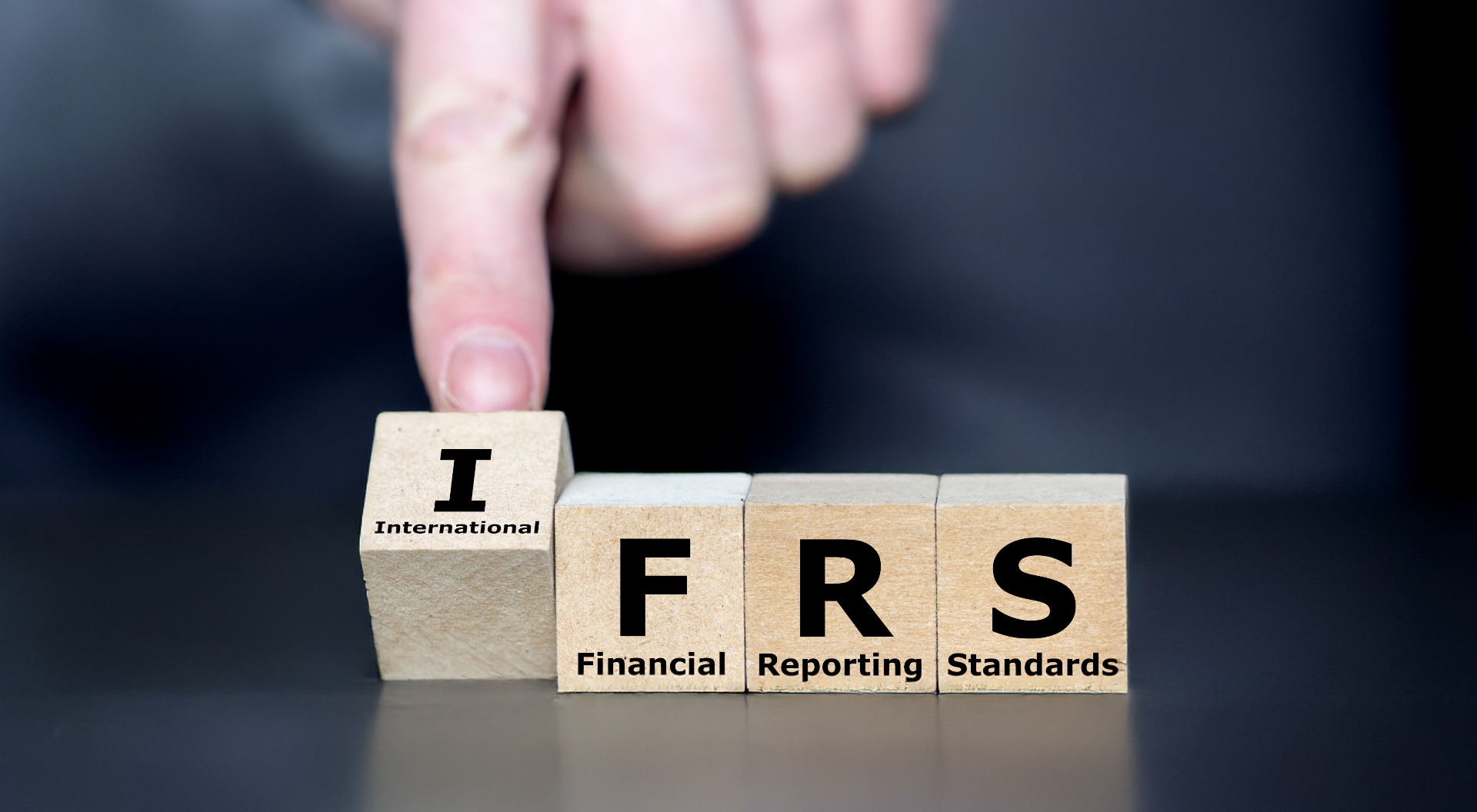
Advisory & IFRS Transition
Technical assistance on complex accounting topics and data-first diagnostic for your IFRS transition projects.
IFRS Transition Methodology
A structured 5-step approach to successfully transition to international standards.
IFRS Diagnostic
Identify the accounts and line items that need to transition to IFRS standards.
Exchanges & Documentation
Gather documentation, discuss accounting trade-offs with your teams.
Bridging Table
Design the bridge between local standards and IFRS, line item by line item.
Transition Entries
Integrate and post adjustment entries into your consolidation tool.
Transition Report
Document the approach and produce the IFRS transition report (FR/EN).
IFRS Diagnostic
Identify the accounts and line items that need to transition to IFRS standards.
Exchanges & Documentation
Gather documentation, discuss accounting trade-offs with your teams.
Bridging Table
Design the bridge between local standards and IFRS, line item by line item.
Transition Entries
Integrate and post adjustment entries into your consolidation tool.
Transition Report
Document the approach and produce the IFRS transition report (FR/EN).
Built-in Automation
A significant part of our methodology is automated: automatic account mapping, configurable adjustment rules, and built-in consistency checks.
Accounting gap diagnostic
Systematically identify gaps between your local accounting standards chart of accounts and applicable IFRS standards.
Lease contracts
Contract identification, right-of-use asset and lease liability calculations.
Revenue recognition
Customer contract analysis, performance obligation identification.
Financial instruments
Financial asset classification and measurement, ECL provisions.
Provisions & Commitments
Employee benefits, risk provisions, off-balance sheet commitments.
Deferred taxes
Temporary differences, deferred tax assets and liabilities.
Comprehensive mapping of local accounting standards/IFRS gaps and impact prioritization per standard
Data quality audit
Assess the ability of your information systems to feed a reliable IFRS consolidation.
Completeness
Is all required data available?
Reliability
Is the data consistent and reconciled?
Granularity
Is the level of detail sufficient for IFRS adjustments?
Source mapping: General Ledger, sub-ledgers, contract management, intercompany transactions
Account mapping & data model
Build the bridge between your current chart of accounts and target IFRS financial statements.
Mapping table
Local accounting standards accounts to IFRS financial statement line items
Target data model
Tables and fields required for IFRS consolidation
Adjustment rules
Automatable transformation logic for each standard
« IFRS transitions rarely fail on the standard itself. They fail on the data: incomplete, scattered, unreconciled. »
— Lessons learned, 50+ Altesia engagements
What you get
IFRS gap report + impacts
Complete mapping of local accounting standards/IFRS divergences with qualitative and quantitative impact estimates per standard.
Data quality scorecard + fixes
Data quality assessment across 3 axes (completeness, reliability, granularity) with prioritized correction list.
Local accounting standards to IFRS mapping + 30/60/90 plan
Operational mapping table and phased 3-month action plan for implementation.
Ready to clarify your transition?
A structured diagnostic to turn uncertainty into a concrete action plan.
Book your 30-min scoping callWho does what
Clear responsibility allocation between Altesia and your teams.
| Activity | Altesia | Client |
|---|---|---|
| Mission scoping | R | A |
| Technical analysis & standards research | R | I |
| Deliverable drafting (memos, notes) | R | C |
| Accounting position validation | C | R |
| Auditor interface | R | A |
Risks we anticipate
Incomplete data
Incomplete or unreconciled source data can compromise IFRS diagnostic reliability.
Undocumented accounting choices
Unformalized accounting decisions create inconsistency risk and potential auditor rejection.
Audit timeline
A late diagnostic can jeopardize the audit timeline and financial statement certification.
Our intervention model
Progress meetings
Frequency adapted to the mission: regular checkpoints for transition projects, ad hoc exchanges for technical advisory.
Auditor review
Regular touchpoints with statutory auditors to anticipate control topics.
Chief Financial Officer (CFO) sponsor
A Finance Department representative for accounting arbitrations and validations.
Measured impact
Standards covered
Coverage rate of applicable IFRS standards in our diagnostics.
Diagnostic timeline
Average duration for a complete IFRS diagnostic.
Audit reservation
Zero audit reservations on transitions supported by our teams.
Need IFRS expertise?
Technical assistance or structured diagnostic: let's discuss your challenges and identify the right approach.
of our diagnostics result in an actionable plan
or call directly: +33 1 89 70 65 72